The Biggest Attribution Mistake Businesses Make
In Albuquerque digital advertising, a common issue is that most marketing reports tell you only the last touch that generated your leads.
For businesses investing in Google Ads, streaming TV, Meta advertising, SEO, or programmatic advertising, understanding marketing attribution is critical to lowering cost per lead and improving long-term ROI.
The information in most marketing reports doesn’t give you insight on the customer journey; it only shows you the last interaction before someone makes a phone call or sends a contact form. Those actions are known as conversions. That’s because most digital agencies don’t focus on multi-touch attribution. Some hardly focus on conversions, instead looking at clicks and impressions.
At Ad House Advertising, we see this misunderstanding frequently among businesses in the Albuquerque and Rio Rancho metro area.
A lead comes in, and the marketing report says:
- Google Ads generated it
- Or Meta generated it (and Meta claims credit for leads, if the user only saw one ad!)
So naturally, that platform is given all the credit for the lead.
But that’s only a fraction of what actually happened.
Because by the time a prospective customer converts, they’ve usually already:
- Seen your brand
- Recognized your name
- Built a level of trust
And none of that customer journey mapping shows up in a simple “last click” report.
What Is Last Touch Attribution?
Last touch or last click attribution gives 100% of the credit to the final action someone takes before becoming a lead.
For example:
- A user searches “AC repair Albuquerque”
- Clicks a Google Ad
- Calls your business
Google gets all the credit.
This model is popular because it’s simple. It’s easy to track, easy to report, and easy to understand. But simplicity comes at a cost to your business.
The Problem with Last Touch Attribution
Last touch ignores everything that happened before that final interaction.
It assumes the decision started at the moment of the click.
But in reality, that click is often the end of the decision-making process—not the beginning.
For many Albuquerque businesses, the real customer journey starts days or even weeks earlier through awareness campaigns, streaming TV ads, display advertising, social media exposure, or retargeting campaigns.
That’s why relying entirely on Google Ads attribution can create an incomplete picture of marketing performance.
And, as we’ll explain, evaluating results based only on last touch attribution means you’ll pay too much for your advertising results.
What Is First Touch Attribution?
First touch attribution focuses on where the customer journey actually began.
It answers a different question:
“How did this person first discover your business?”
That same customer who clicked your Google Ad may have:
- Been exposed to your display ads across multiple websites
- Seen your streaming TV ad earlier in the week
- Scrolled past your business on social media several times
- Heard a radio ad during their commute
By the time they searched, they already recognized your brand.
And that recognition is what led them to click your Search ad instead of someone else’s. Perhaps they even bypassed the paid ad entirely and found your website organically through SEO– an even bigger win.
The Reality: Customers Don’t Convert in One Step
In Albuquerque and Rio Rancho, consumers rarely make instant decisions—especially for:
- Home services
- Automotive purchases
- Medical or wellness services
- Financial services
- Large home investments
Instead, they take time. In any large purchase or major decision:
They research.
They compare.
They revisit.
And most importantly, they need to feel confident in their choice. This is why multi-touch attribution matters. Customers interact with businesses across multiple platforms before ever making contact. They’ll also review your company’s online reviews, an important aspect of the customer journey.
The Role of Familiarity
Familiarity is one of the most powerful drivers of conversion.
When someone sees your brand multiple times, something subtle happens:
- Your business feels more established
- Your name becomes recognizable
- You feel like a safer choice
That’s why awareness advertising matters and how multi-touch marketing works—and why last-touch reporting alone doesn’t tell the full story.
What Does Multi-Touch Marketing Look Like?
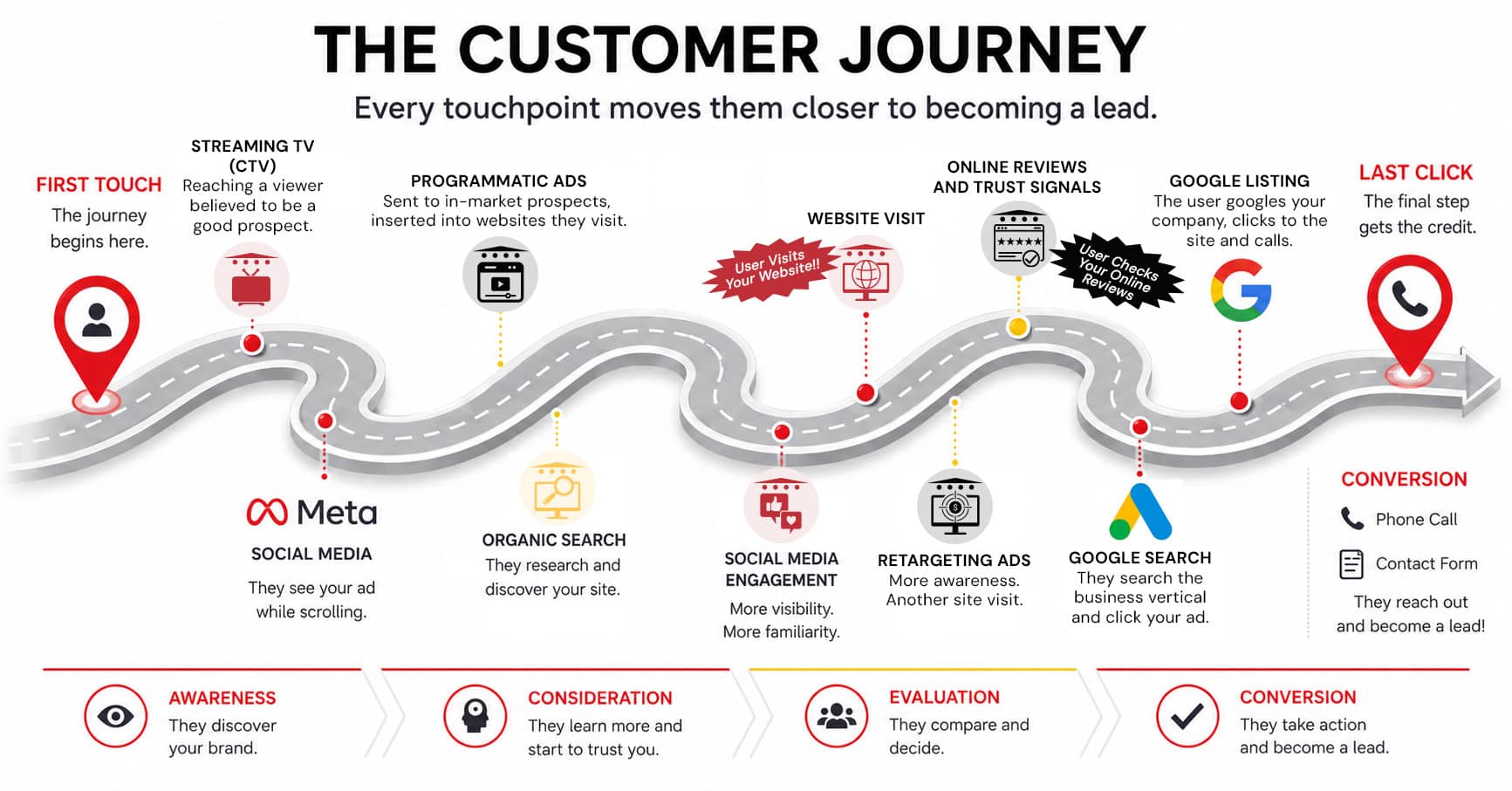
Let’s break down a realistic example of how someone in Albuquerque becomes a lead:
Day 1: They see your streaming TV ad while watching a show
Day 2: They scroll past your business on Facebook
Day 4: They notice a display ad while browsing a news site
Day 7: They see your brand again on Instagram
Day 10: They search for your service on Google
Day 10 (same day): They click your Search ad, visit the site, then tap to call from their phone
What the Report Says:
Google generated the lead.
What Actually Happened:
Multiple platforms influenced the decision.
That’s the difference between last-touch reporting and real customer behavior. Understanding omnichannel marketing unravels the beginning of the customer journey. Once that data is available, it allows us to continue to improve results while decreasing the cost per conversion.
Why This Matters for Your Marketing Budget
If you rely only on last-touch attribution, your strategy becomes unbalanced.
You will likely:
- Over-invest in Google Ads
- Under-invest in awareness channels that are usually lower cost than a paid ad click
- Cut campaigns that are actually working
This leads to:
- Higher cost per lead
- Slower long-term growth
- Missed opportunities to scale
Because you are only funding the final step, not the steps that make it possible.
The Hidden Impact of Awareness Campaigns
Awareness campaigns often get undervalued because they do not produce immediate leads.
But their impact shows up in other ways:
- Increased branded searches
- Higher click-through rates
- Improved conversion rates
- Lower cost per acquisition over time
At Ad House Advertising, we regularly see campaigns where adding awareness channels improves the performance of Search and social campaigns.
This happens because people are no longer discovering your brand for the first time—they are recognizing it.
How Ad House Advertising Tracks the Full Customer Journey
Understanding attribution requires more than one tool.
At Ad House Advertising, we connect multiple data sources to build a clearer picture of how customers actually convert.
Call Tracking (CallRail)
For many local businesses, phone calls are the primary conversion, followed by website form submissions. Our partnership with CallRail, the premier call tracking and marketing analytics platform, allows us to:
- Identify which campaigns are driving calls as well as form submissions.
- Track the source of those conversions
- Understand how users found the business
- Analyze and optimize which campaigns are delivering the best ROI and which need improvement.
CallRail helps connect digital advertising efforts to real-world consumer actions.
Google Analytics (GA4)
GA4 provides deeper insight into user behavior and assisted conversions.
It helps us:
- Track how users interact with your website
- Identify assisted conversions
- Understand how different channels contribute to a conversion
- Analyze user paths across devices and sessions
Instead of focusing only on the last click, GA4 helps reveal the full journey.
Data Studio Dashboards
Data from multiple platforms can quickly become overwhelming.
Data Studio, previously known as Looker, allows us to:
- Combine data into one clear reporting view
- Visualize performance across multiple channels
- Identify trends over time
- Better understand why campaigns are succeeding
This lets us make strong marketing decisions based on complete information. It’s not just easier to understand what is happening—but why it is happening.
Programmatic & Platform Data
Platforms like:
- The Trade Desk
- Google Ads
- Meta Ads
provide insight into impressions, reach, audience engagement, and visibility.
Even when users do not click immediately, these platforms show:
- How often your brand is being seen
- How audiences are interacting with your ads
- How exposure leads to later conversions
This is critical for understanding influence—not just clicks.
What We Consistently See Across Albuquerque Business Campaigns
When we analyze full-funnel digital advertising campaigns, clear patterns emerge:
- Streaming TV drives branded search traffic
- Display advertising increases engagement with Search campaigns
- Social media builds familiarity and trust
- Retargeting converts users who did not act the first time
Each platform plays a role.
And when combined, they outperform any single channel on its own.
Why Multi-Touch Attribution Leads to Better Decisions
When you understand the full customer journey, your marketing strategy improves.
You can:
- Allocate the budget more effectively
- Identify which channels are driving awareness
- Understand which platforms are closing leads
- Scale marketing efforts with greater confidence
Instead of guessing, you are making decisions based on a complete picture of customer behavior.
Marketing Isn’t About One Click
The shift that businesses should make is this:
Stop thinking about marketing as a single action.
Start thinking about it as a sequence.
Because by the time someone converts:
- They have already seen your brand
- They have already formed an opinion
- They have already narrowed their options
The click is just the final step.
The Bottom Line
Leads do not just come from Google.
They do not just come from social media.
They come from every interaction leading up to that moment.
And if you are only measuring the last touch, you are missing everything that made that lead possible.
Businesses– or advertising agencies– that understand marketing attribution, multi-touch attribution, and full-funnel digital advertising will make better marketing decisions and build stronger long-term growth.
Frequently Asked Questions
What is multi-touch attribution?
Multi-touch attribution measures how multiple advertising channels contribute to a lead or conversion instead of giving all the credit to the final click.
Why is last-click attribution misleading?
Last-click attribution ignores earlier interactions like streaming TV, display ads, SEO, and social media that helped influence the customer’s decision.
How does CallRail help track leads?
CallRail tracks phone calls and form submissions so businesses can better understand which marketing campaigns are driving conversions.
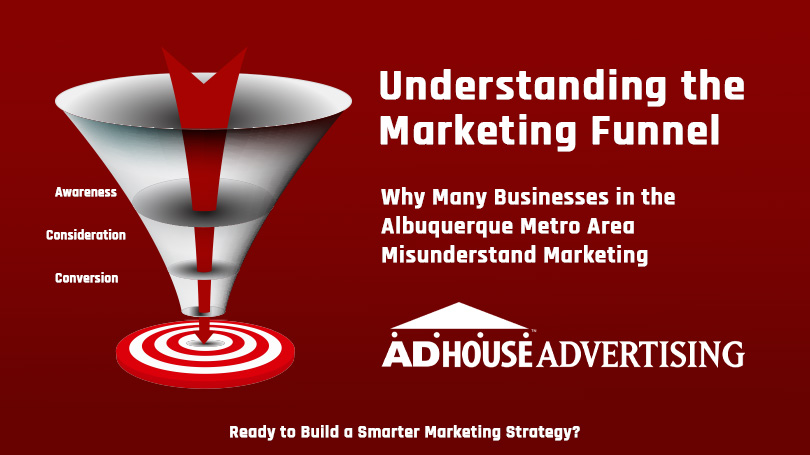
What is full-funnel marketing?
Full-funnel marketing uses awareness, consideration, and conversion campaigns together to guide customers through the entire buying journey.
Why do awareness campaigns matter?
Awareness campaigns increase brand familiarity, improve conversion rates, and often reduce long-term cost per lead.
You
Ready to Understand Where Your Leads Really Come From?
Businesses that understand attribution today will have a major competitive advantage as AI-driven advertising and automated campaign optimization continue to evolve.
At Ad House Advertising, we help businesses across the Albuquerque Metro and New Mexico move beyond surface-level reporting and understand the full customer journey.
Because better data leads to better strategy.
And better strategy leads to stronger, more consistent business growth.